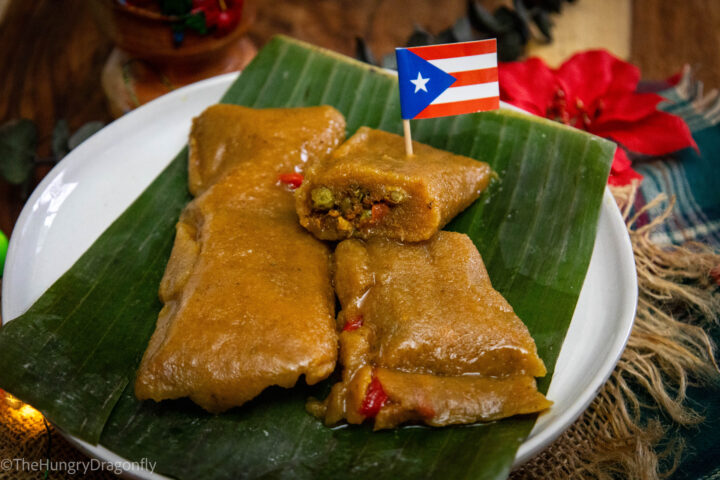
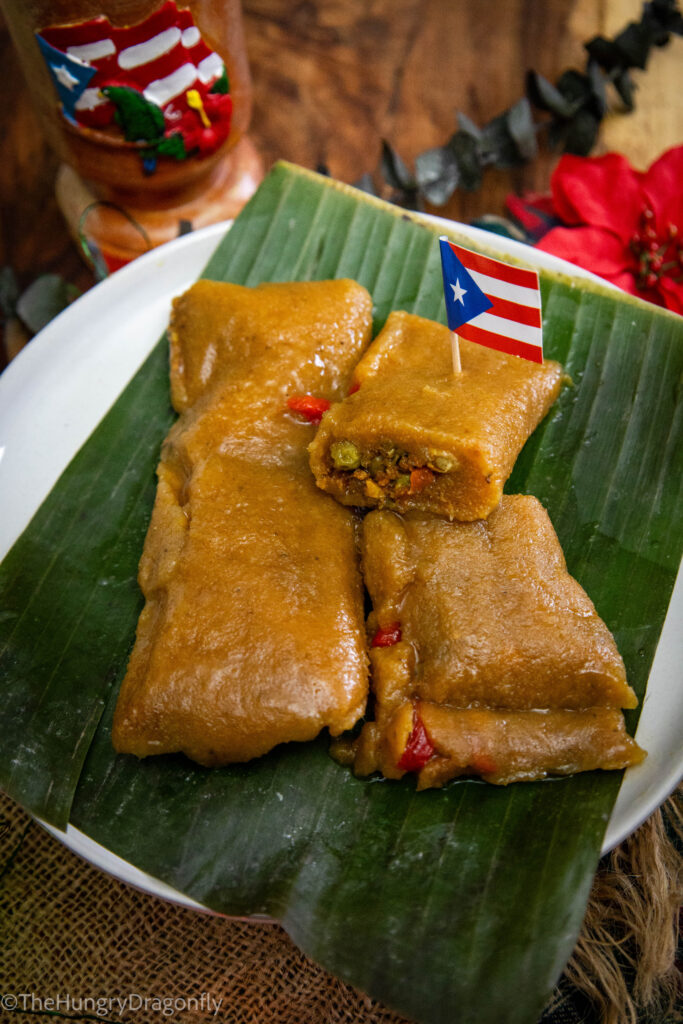
These Vegan Puerto Rican Pasteles are the plant-based version of our traditional pasteles de masa. They are flavorful and filled with vegan ingredients, delighting your holiday and honoring our culinary traditions.
Can You Make Puerto Rican Pasteles Vegan?
Puerto Rican pasteles are traditionally made with a savory masa (dough) of green bananas, plantains, and yautía. They are filled with a meaty mixture and wrapped in banana leaves. Pasteles are a staple during holidays and celebrations. But what if you’re vegan? With some creative substitutions, you can enjoy all the traditional flavors of Puerto Rican Pasteles without animal products. Let’s dive into a vegan recipe for pasteles puertorriqueños that will delight your taste buds and honor Puerto Rican culinary traditions.
What are Puerto Rican Pasteles?
Food historian and author of the book Cruz Miguel Ortíz Cuadra explains that pasteles were mentioned as early as 1843 in the book El aguinaldo puertorriqueño, which explored Puerto Rican Christmas traditions. The origins of pasteles, however, can be traced back several centuries to Spanish colonial times, before they became a staple Puerto Rican Christmas dish. The first recipes for pasteles didn’t appear in cookbooks until the 1930s.
Pasteles are a traditional dish in some countries in Latin America and the Caribbean. In Puerto Rico, pasteles were originally made by the indigenous people. Tainos made the masa from cassava, yautia, and squash. Pasteles became a cultural traditional holiday recipe. There’s no Puerto Rican Christmas gathering without pasteles. Puerto Rican pasteles come in different varieties, including Pasteles de arroz, Pasteles de Yuca, and Pasteles de Platanos.
However, traditional pasteles masa typically consists of grated green bananas, green plantain, white yautia, and calabaza. They are usually filled with pork or chicken, garbanzos, red jarred pimentos, and olives.
Is It Hard to Make Pasteles?
Making pasteles is a work of art, so many people prefer to buy them instead of making them from scratch. I’ve been intimidated by making pasteles de masa for a while. Therefore, I should tell you that pasteles are not easy to make. The process requires effort and is time-consuming because of the different steps. But living far away from the island makes me nostalgic, especially during the holidays. That’s why it is important to keep my family traditions alive. Making traditional Puerto Rican food gives us a sense of our homeland.
This recipe brought me great family memories that I cherish with all my heart. Like my tias and abuelas setting the table with all the ingredients to assemble the pasteles. Family moments that bring joy and sadness at the same time.
What Makes Pasteles Special?
Pasteles are more than a meal; they are a cultural experience. Each pastel is lovingly wrapped by hand and embodies the spirit of family gatherings, particularly around Christmas. While the traditional recipe includes pork or chicken, my vegan version uses plant-based ingredients to deliver all the comforting, traditional flavors from the island.
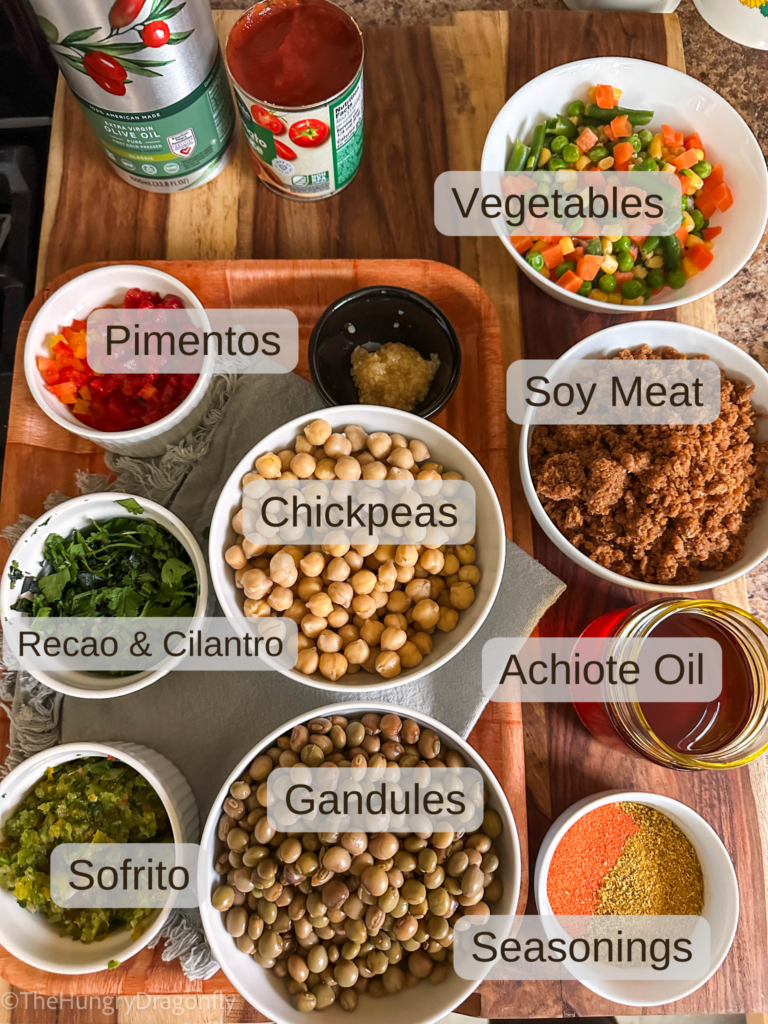
This is what you need for the vegan filling.
Tips for Making Vegan Pasteles
- Banana Leaves Prep: Carefully using a pair of tongs pass banana leaves over an open flame briefly to soften them, making them more pliable. You can microwave banana leaves in batches for 30 seconds or a minute. You can also wash them, dry them with a towel, and refrigerate them inside an air-tight ziplock bag in the refrigerator overnight.
- It’s better to set up all your ingredients and materials and get the family together to assemble the pasteles. This is a tradition and the best way to gather the family.
- Divide the project into 2-3 days. Make the sofrito, achiote oil, filling and the masa in advance. Trying to make everything the same day can be overwhelming.
- If you are peeling and grating your viandas, chop everything into small chunks and use a food processor.
- For this recipe, I used frozen masa due to the lack of green bananas in the state of Washington. Every time I find green bananas they have yellow spots and taste sweet. I brought frozen pasteles masa from my last trip to Florida. However, I added pumpkin to complement the frozen masa.
- Masa Texture: If the masa feels too thick, add a bit of vegetable stock or coconut milk.
- I assembled one pastel and boiled it for about 30 minutes to taste the flavor. Then I know if my masa needs more seasoning or not
- Storage: Pasteles can be frozen raw and boiled when ready to eat—perfect for meal prep. There’s no need to defrost pasteles before cooking. You can boil them frozen for about an hour until tender.
If you can’t find recao or any Latin root vegetable visit a local Asia market or any Latin store nearby.
What Do You Need for Making Vegan Pasteles
- Vegan meat substitute: I made a picadillo using mixed vegetables, garbanzos, gandules, and soy meat. However, you can choose any vegan meat alternative and your favorite veggies.
- Masa for pasteles: I used frozen masa but if you have green plantains, yuca, and yautia blanca available you can make it from scratch. Honestly, the frozen masa tastes the same and you save time.
- Achiote oil: You will use the achiote (annatto) to season your filling and brush the plantain leaves to prevent the masa from sticking.
- Sofrito: this is a staple in our kitchen and we use it to season every savory dish we cook. In this case, you will use it to season your vegan picadillo.
- Seasonings: My favorite seasonings are; adobo, sazon, minced garlic, onion powder, cilantro, and recao. These will be used to season the picadillo and the masa.
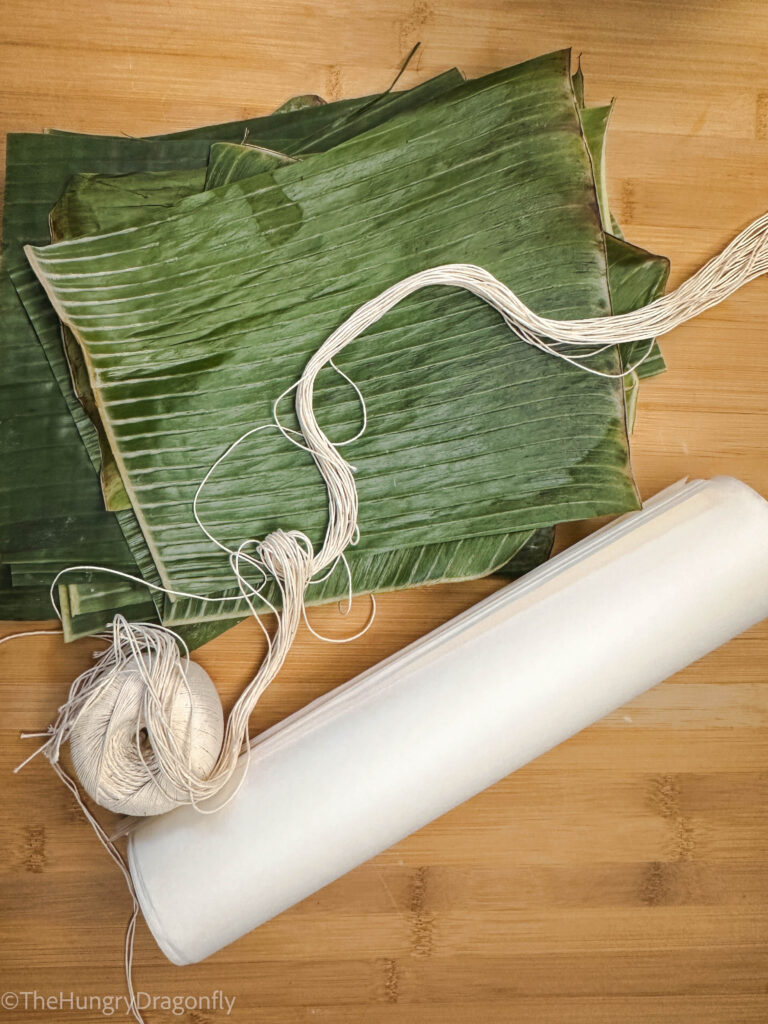
- Banana leaves, butcher’s twine, papel de pasteles, or parchment paper to assemble the pasteles.
How to assemble pasteles?
For this step is best to prepare a workstation with all the ingredients and materials. Assembling a pastel involves a large sheet of parchment paper, a strip of banana leaf carefully heated over an open flame or microwave to make it supple, and a little bit of achiote oil on the leaf. The masa is then placed on the banana leaf and stuffed with the meat mixture. The paper is then folded and tied with butcher’s twine to form packets. You can tie two pasteles together or individually.
Final Thoughts
Vegan pasteles are a modern twist on a timeless classic. Whether you’re vegan or simply curious to try a plant-based version of this beloved dish, this recipe delivers tradition, nostalgia, and bold Caribbean flavors. Ready to bring a little bit of Puerto Rico into your kitchen? Try making these vegan pasteles and share them with loved ones. ¡Buen provecho!
If you try this recipe, let me know what you think! Leave a comment below. Also, don’t forget to take a picture and share it on my Facebook page or tag it #thehungrydragonfly on Instagram! I love seeing your creations!
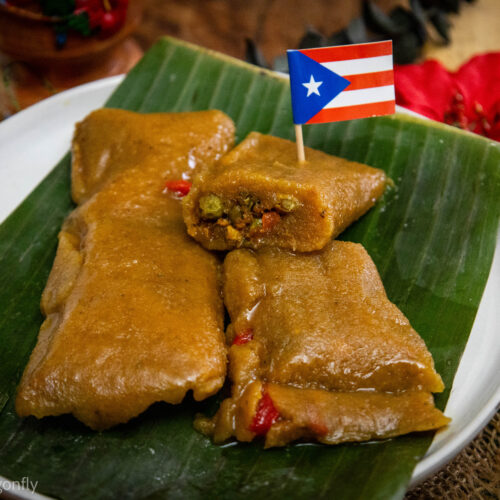
Vegan Puerto Rican Pasteles - Pasteles Puertorriqueños Veganos

Ingredients
Achiote Oil - Annatto Oil
- 1/4 cup achiote seeds (annatto seeds)
- 1 - 1/2 cup vegetable oil
Vegan Filling
- 2-3 tbsp achiote oil
- 1/2 cup sofrito
- 2 cups beefless crumbles or soy meat
- 1 cup vegetable broth
- 1/2 tsp adobo seasoning or more to taste
- 1 envelopes sazon con culantro y achiote or more to taste
- 1/2 tsp dry oregano
- 1/4 cup cilantro chopped
- 1 cup garbanzo beans rinsed and washed
- 1 can gandules (pigeon peas)
- 1/4 cup red jarred pimentos
- 1/3 cup green olives sliced
- 1 cup frozen vegetables
- 1 bay leave
Masa
- 3 pounds frozen masa para pasteles y alcapurrias see notes if using fresh viandas
- 3 pounds frozen masa de guineos
- 2 cups kabocha pumpkin peeled, cubed, and grated
- 1/3 cup achiote oil
- 2 envelopes sazon con culantro y achiote
- 1/2 tsp adobo
- 1/2 tsp dried oregano
- 1/4 cup vegetable broth
- pinch of salt
To Assemble the Pasteles
- 12 green banana leaves cut into 9x12 inches
- 12 strings butcher's twine strings cut into 34 inches long
- 12 pieces papel de pasteles or parchment paper
- 1/3 cup red jarred pimentos optional
- 1/2 cup green olives or capers optional
Instructions
Make the Achiote Oil (Annatto Oil)
- Place the oil and seeds inside a medium saucepan over medium-low heat.
- Cook for 5 minutes stirring frequently until the oil begins to turn a red/orange color.
- Turn off the stove and let the oil sit for 5 more minutes to cool.
- Using a mesh strainer, strain the seeds from the oil. Store at room temperature for a month.
Prepare the Filling
- In a large skillet, heat oil over medium heat. Add achiote oil and sofrito. Cook for a few minutes until fragant.
- Add vegan beefless crumbles, vegetable broth, adobo, sazon, oregano, and cilantro. Cook for about 3 minutes.
- Then add the rest of the ingredients one at a time. Cook for 5 minutes and let it cool. Store in an airtight container and refrigerate until ready to use.
Masa
- Place frozen masa in the refrigerator the night before to defrost. You can also place it inside a bowl over the counter a few hours before using it.
- Then place masa inside a big bowl, add grated pumpkin, achiote oil, sazon, adobo, oregano, vegetable broth, and salt.
- Mix using your hands or a spatula. Taste the masa to make sure is not bland. Adjust seasonings if needed. Remember that the pasteles will lose some of the salt when boiling.
- Cover the masa and refrigerate until you are ready to use it.
Prepare Banana Leaves
- Prepare the banana leaves by removing the ridge and cutting them into 9 x 12 inches wide. Wash the leaves under running water and dry them with a paper towel. I used frozen banana leaves.
- Microwave banana leaves in batches for 1 minute to make them pliable. See the video for other ways.
Assemble Pasteles
- Cut butcher's twine into 30-34 inch pieces, and set aside.
- Set up a workstation with the banana leaves, butcher's twine, pasteles paper, achiote oil, masa, veggies, red pimentos, olives, and filling.
- Place one sheet of pastel paper or parchment paper in front of you. Then place a banana leaf on top of the paper towards the edge close to you.
- Brush a little bit of achiote oil onto the center of the banana leaf.
- Scoop 1/2 cup of the masa onto the banana leaf and spread out into a rectangle.
- Spread 1/4 cup of filling down the center, and add red pimentos and olives on top if you like.
- Fold the masa in half using the banana leaf. Pull the banana leaf back towards the edge of the parchment paper and roll the parchment paper over the banana leaf once.
- Then press down the edges of the banana leaf pushing the masa toward the center of the pastel and fold in the sides of the parchment paper on both sides.
- Once the sides are folded in, keep rolling your pastel forward, flattening it out as you go. Set aside the pastel and repeat the process to make another pastel. Use the same technique and watch the tutorial for more details. It takes time to practice.
- After rolling another pastel, you can tie them together or individually. Tie one pastel or two together like a present. I recommend you watch the tutorial to see the process.
- You can boil them right away or freeze them for later. If you are boiling them right away, add a dash of salt to the water and boil for 30 minutes. If you are boiling them frozen, add salt to the water and boil them for 60 minutes.
- Once they are cooked, turn off the stove and let them sit for 10 minutes. Then carefully using a pair of tongs, pick the pastel out of the water by the string and place it on a plate or tray. Cut the string, carefully unwrap it, and enjoy.
Notes
Other Puerto Rican Recipes
Puerto Rican Rice Pasteles – Vegan
Puerto Rican Coquito Vegan Recipe
Panetela de Guayaba Puerto Rican Recipe
9j2v4h
AI linkbuilding tool with chatgpt